.avif)

.png)

Ontology Enrichment
Turn your enterprise data into a domain-specific ontology built for knowledge graphs and AI.
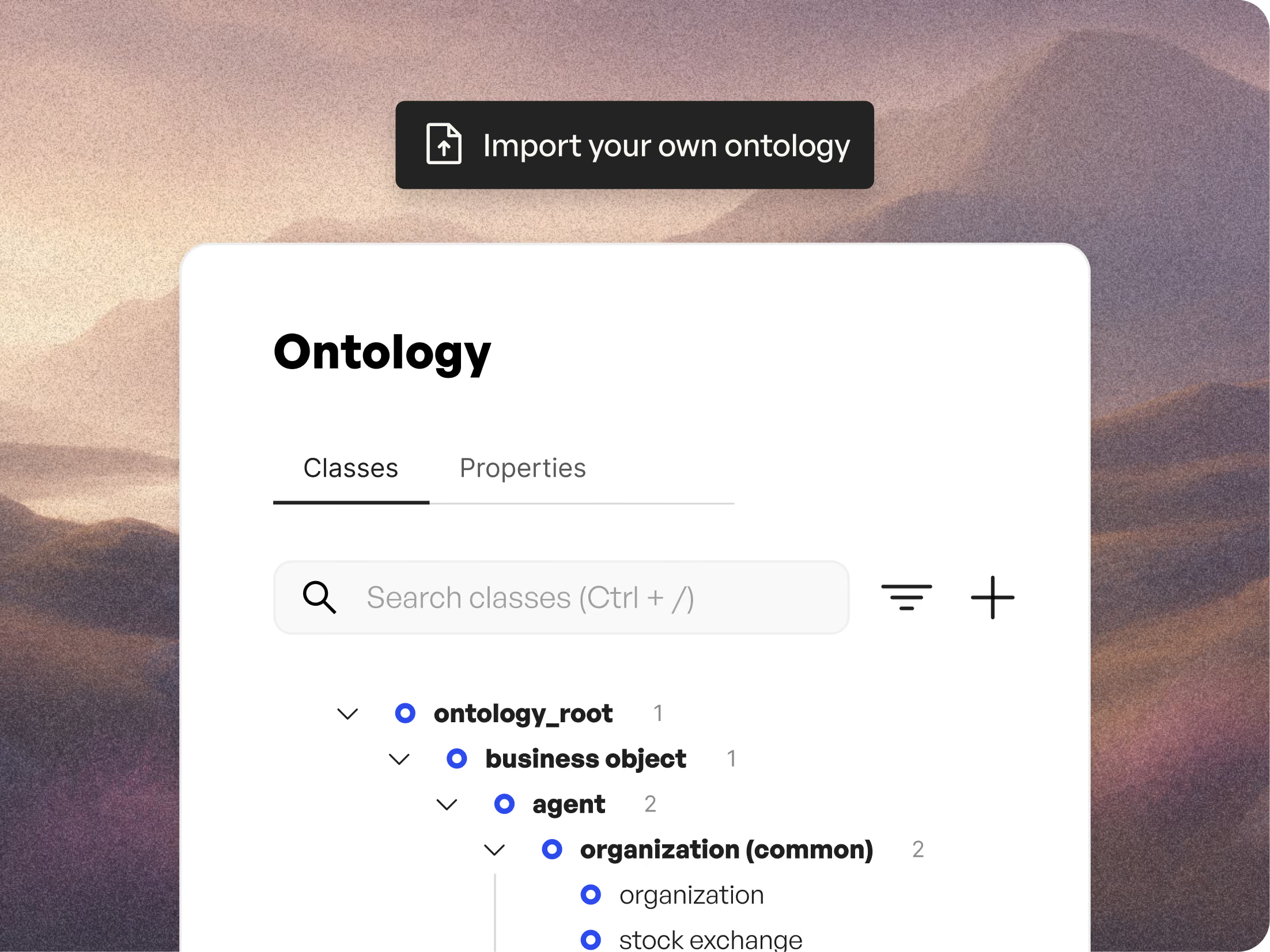
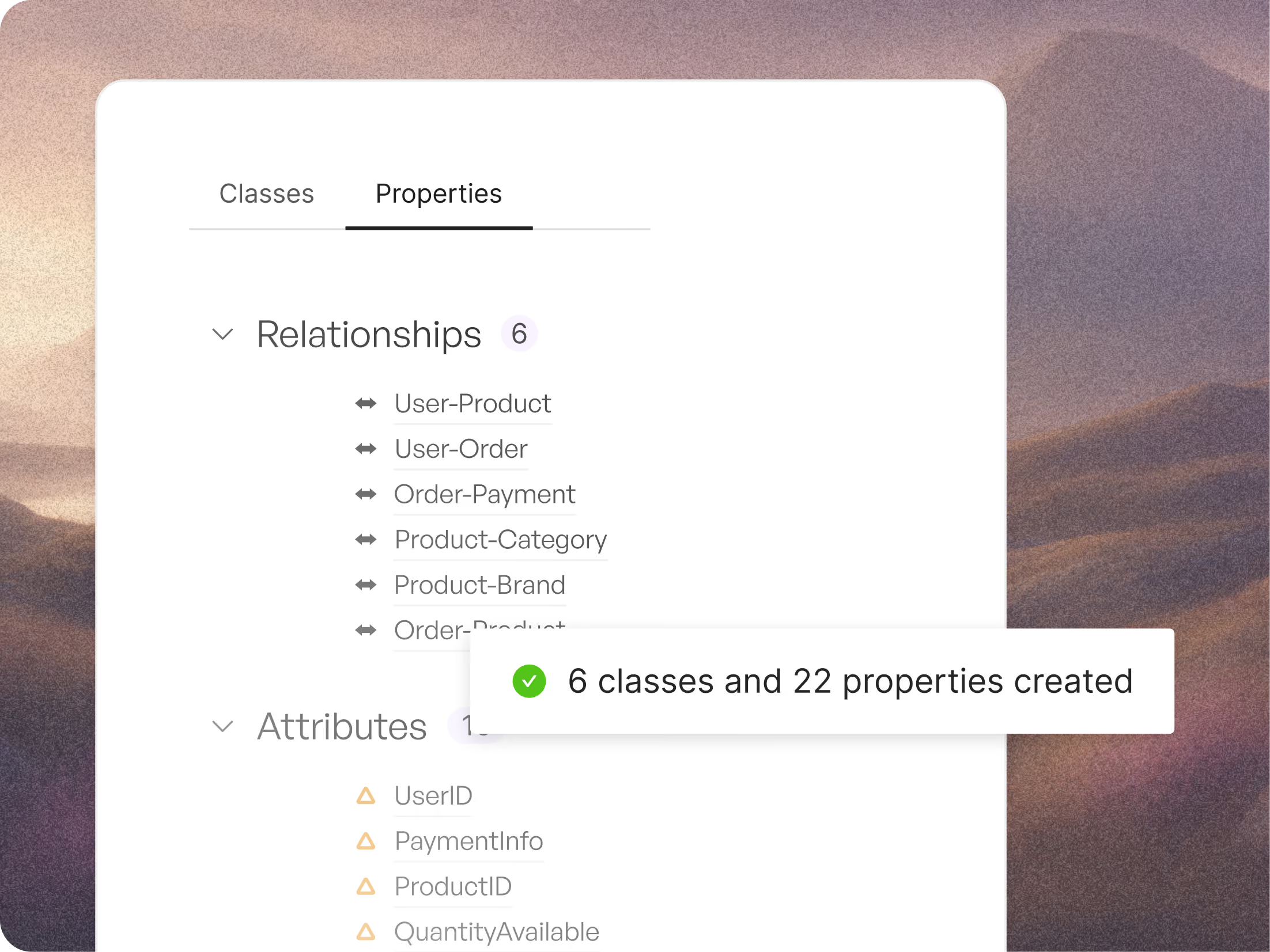
Perseus analyzes your documents and structured data to generate an ontology grounded in your business context. Define entities, relationships, properties, and constraints, then review, refine, and version your schema before using it to build production knowledge graphs.
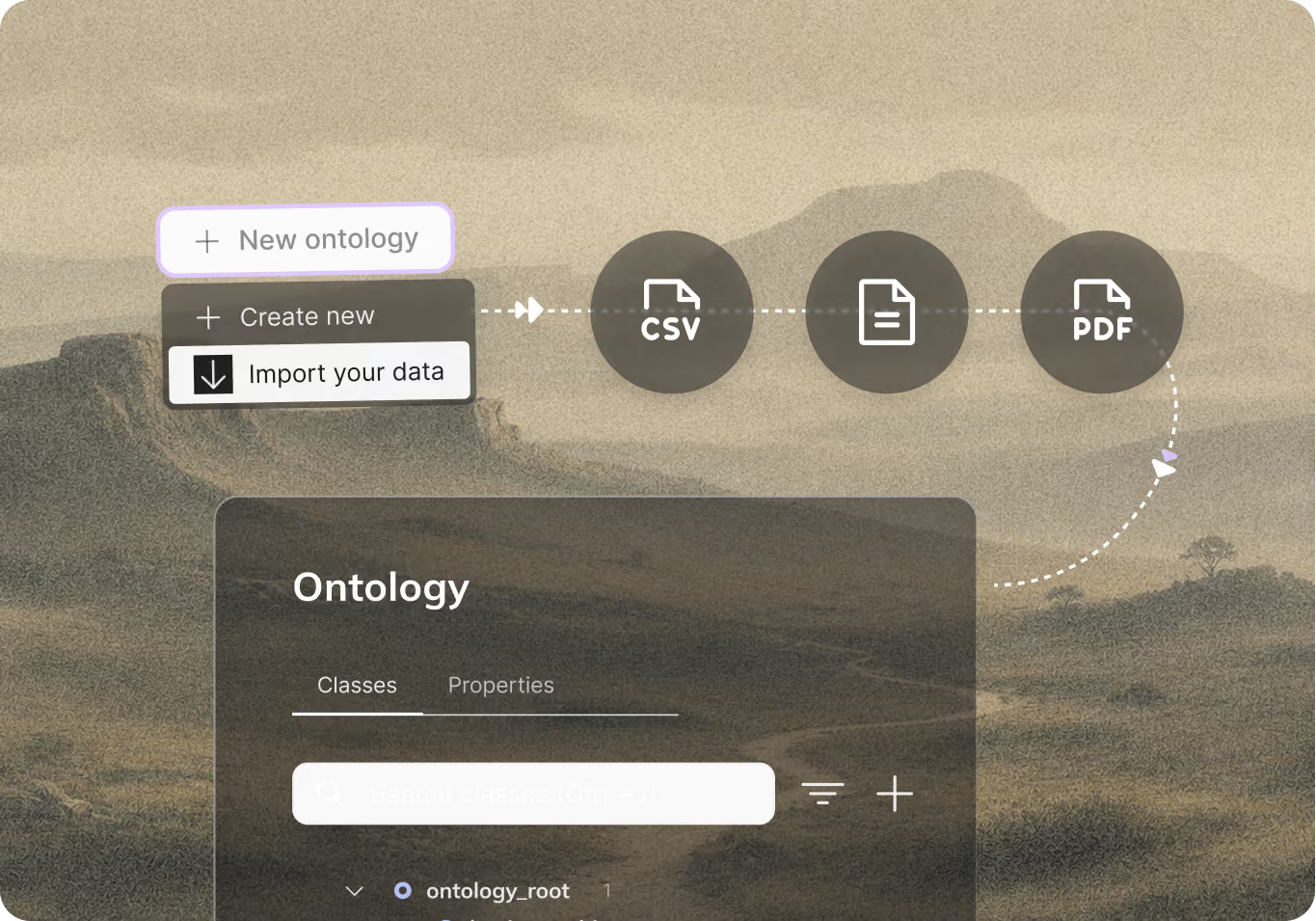










From ontology design to a production-ready knowledge graph
"We'd stalled on getting our knowledge graph production-ready for months. With Perseus we had a reliable ontology and a working graph pipeline in under a month."

Magnus Helander
Read the case study

Explore ready-to-use ontology examples
Insurance
Access the insurance contracts ontology, a structured, machine-readable model of home and vehicle insurance policies.
Download the full ontology
Drug Approval
Access the Drug Approval ttl file, a ready-to-use ontology mapping US and European requirements for new drug applications.
Download the full ontology
CSRD
Access the CSRD Ontology ttl file, structuring corporate sustainability reports for AI-driven analysis, compliance, and governance insights.
Download the full ontology
AI Regulations
Access the AI Regulation Act Ontology, a structured, machine-readable model mapping the information from EU Artificial Intelligence Act (2024/1689)
Download the full ontology
Generate ontologies from your data
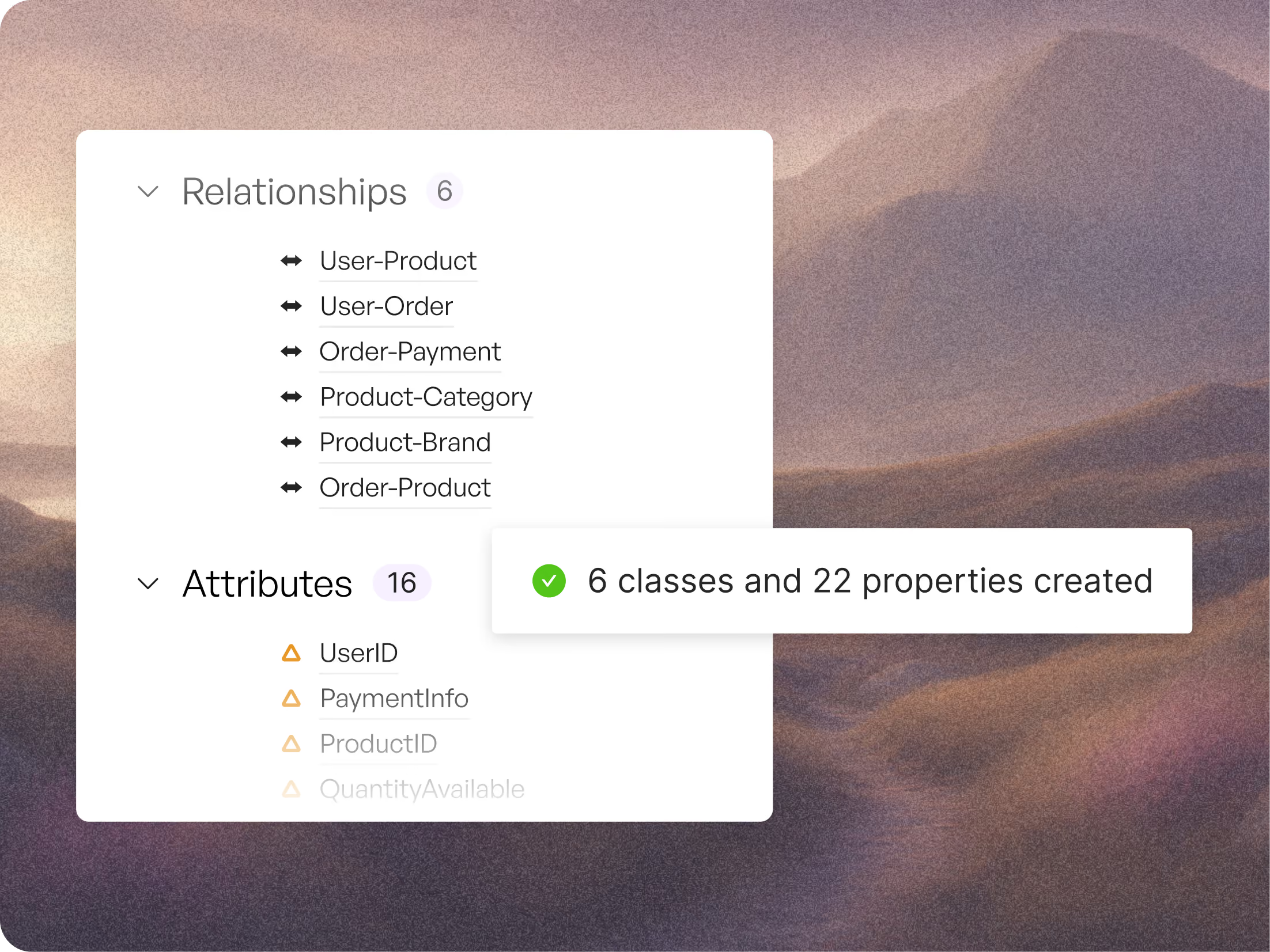
Automatically identify entities, concepts, properties, and relationships from your documents and structured sources. Perseus generates a domain-specific starting point based on your data and use case.
Review and control your schema
Keep domain experts in the loop. Review proposed concepts and relationships, adjust the schema, and maintain control over how your enterprise knowledge is represented.
Connect knowledge across sources
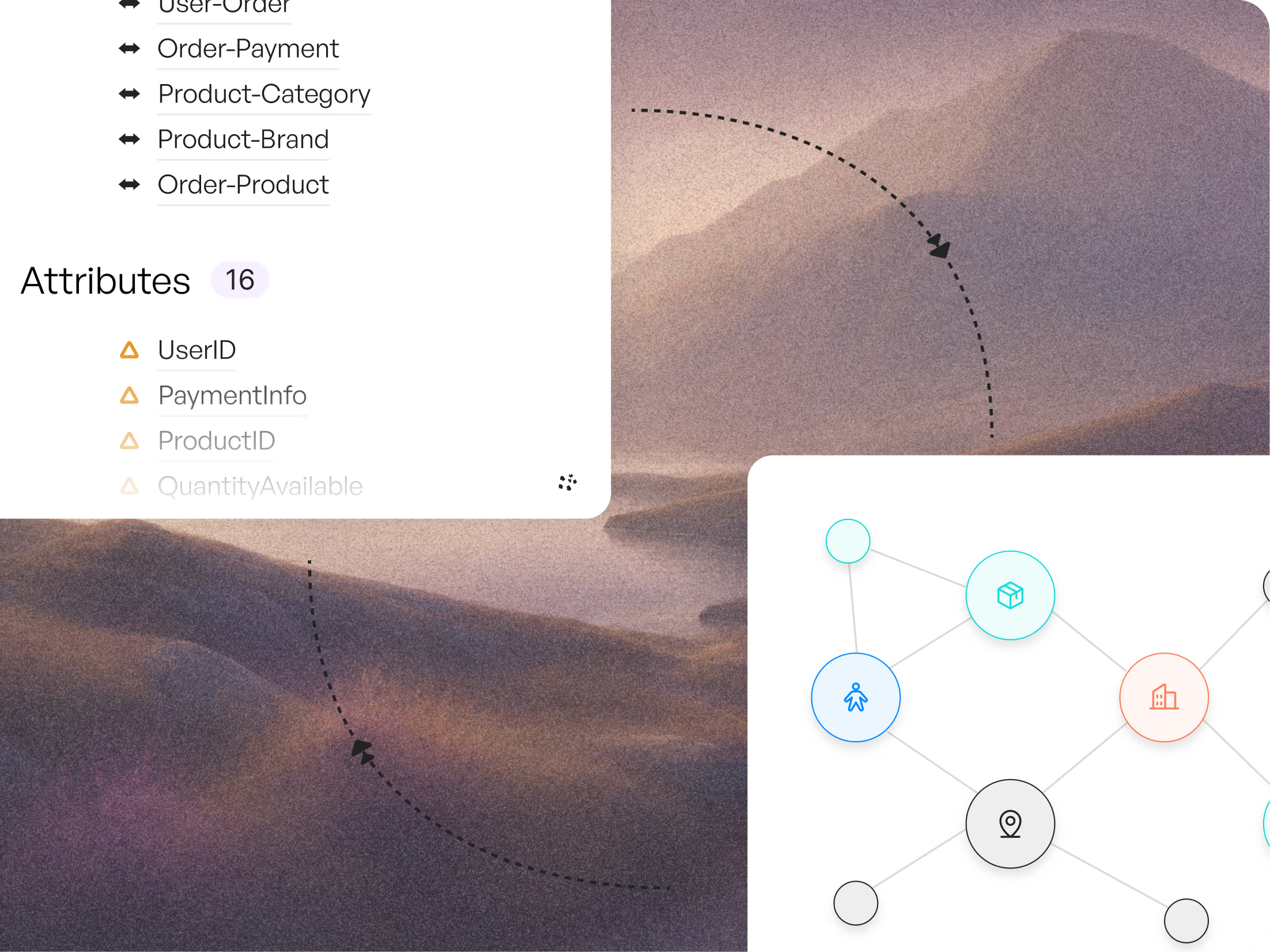
Use a shared ontology to align information across documents, databases, APIs, and enterprise systems. Resolve the same entities across different sources into a consistent semantic model.
Build AI on connected context
Use your ontology as the blueprint for a knowledge graph. Give GraphRAG systems and AI agents access to entities and relationships rather than relying only on isolated text chunks.
How it works?
Here's what we offer in four steps:
1. Connect your data
Upload documents and structured sources such as PDFs, tables, reports, databases, and enterprise data.

2. Define your use case
Describe what the ontology needs to represent. Perseus uses your use case and source data to identify the relevant concepts and relationships.
3. Connect knowledge across sources
Perseus proposes a domain-specific ontology with entity types, relationships and properties. Review and refine your ontology with your technical and expert teams.
4. Build your knowledge graph
Use your ontology as the blueprint for a knowledge graph. Give GraphRAG systems and AI agents access to entities and relationships rather than relying only on isolated text chunks.
Use the ontology as the schema for your knowledge graph. Map your data to it, resolve entities across sources, and create connected context for GraphRAG and AI agents.
Frequently Asked Questions
Perseus builds and maintains the knowledge graph by transforming source data into structured knowledge. A graph database stores and queries that graph. Perseus can therefore complement graph database infrastructure rather than replace it.
Perseus is Lettria’s graph infrastructure for building ontology-powered knowledge graphs for AI. It turns enterprise data into structured entities and relationships that AI applications and agents can retrieve and reason over.
Perseus analyzes your source data and proposes an ontology grounded in your domain. The generated schema can include entity types, relationship types, properties, and constraints. Your team can then review, refine, version, and extend it before using it in production.
Perseus can work from unstructured and structured sources, including PDFs, tables, databases, and raw files. This allows the ontology to reflect the terminology and relationships present in your actual enterprise data.
Yes. You can import and extend an existing ontology rather than starting from scratch. Perseus currently supports formats including OWL, SKOS, TTL, and custom ontology formats.
Your ontology becomes the schema for your knowledge graph. Perseus maps your data to that schema, extracts entities and relationships, resolves entities across sources, and builds a connected knowledge graph that can be used by AI applications and agents.
An ontology defines the entities, relationships, and rules that structure a knowledge graph. This gives GraphRAG systems access to explicit relationships between information instead of relying only on semantic similarity between isolated text chunks.
Perseus is designed for technical teams building ontology-powered knowledge graphs and graph-based AI applications. Knowledge Studio is Lettria’s graph-native document intelligence platform for knowledge and business teams working with complex enterprise documents. Both are part of Lettria’s Graph Context Layer and use connected knowledge to provide more structured and traceable context for AI.
Read more about Lettria
Turn complex enterprise knowledge into reliable AI
Choose the path that fits your team: explore Knowledge Studio or start building with Perseus.