




5 min
How to use AI in healthcare: practical applications and implementation guide
As we explore how to use AI in healthcare, we must move beyond theoretical promises to practical, verifiable implementation. Modern clinical environments demand artificial intelligence solutions that can process complex medical data while maintaining strict regulatory compliance. The problem is clear: standard AI tools often lose critical context when handling intricate medical documents, leading to distorted outputs and unexplained answers. Tools like Lettria address this by converting unstructured clinical documents into structured knowledge graphs, giving healthcare providers the transparent, traceable AI systems they need to directly improve patient outcomes.
Key takeaways
- AI in healthcare moves beyond theory to practical implementation through tools that convert unstructured clinical documents into structured knowledge graphs, maintaining critical medical context that standard vector-based systems lose.
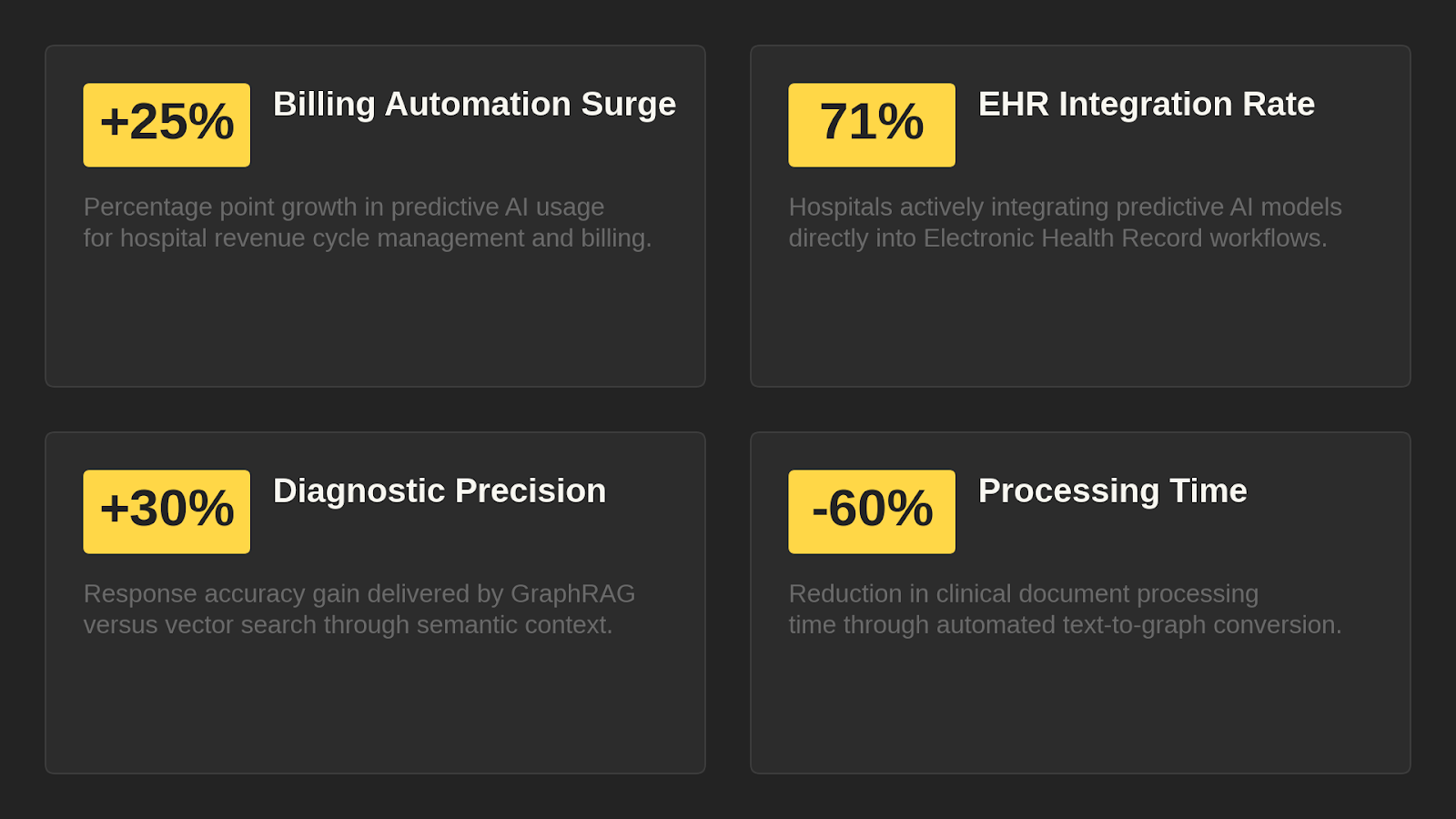
- GraphRAG technology delivers up to 30% more accurate responses than traditional AI systems by preserving semantic relationships in medical data, providing full traceability from AI output back to source documents.
- Healthcare organizations rapidly adopt AI for administrative automation, with predictive AI usage surging 25 percentage points for billing and reducing document processing time by 60% through text-to-graph conversion.
- Successful clinical AI deployment requires ontology-driven approaches that make decision-making interpretable by human clinicians, addressing the dangerous "black box" problem in regulated medical environments.
Key applications of AI across clinical healthcare
To understand the impact of this technology, we can compare traditional administrative processes with modern AI-driven solutions:
Artificial intelligence is fundamentally restructuring clinical workflows by augmenting human capabilities with advanced computational models and machine learning.
Medical imaging and early diagnostic analysis
Machine learning algorithms analyze complex radiological data, including MRIs, CT scans, and X-rays, to detect anomalies with high precision. The FDA reviews AI medical devices for safety, effectiveness, and appropriate clinical study design to confirm these tools meet rigorous clinical standards before deployment.
Deep learning models can identify early-stage pulmonary nodules up to 30% faster than traditional manual review. By identifying these subtle patterns early, clinicians can initiate treatment plans sooner, significantly improving patient outcomes and reducing the long-term burden of disease.
Predictive analytics for patient risk stratification
Predictive algorithms process historical patient data and medical history to forecast disease progression and readmission risks. Recent data shows that hospital predictive AI adoption to identify high-risk outpatients grew by 9 percentage points, reflecting a growing reliance on data-driven foresight.
By analyzing vital signs and lab results in real time, these models help healthcare professionals allocate resources efficiently. This allows the clinical team to intervene before critical health events occur, ultimately delivering more proactive and personalized patient care.
Conversational AI and virtual health assistants
Natural language processing (NLP) powers virtual assistants that handle patient triage, appointment scheduling, and post-operative follow-ups. Conversational AI significantly improves patient engagement and clinical communication workflows by providing 24/7 responses to routine medical inquiries, including initial mental health screenings.
Here's the challenge: most AI systems convert medical data into vectors, losing meaning in the process. When built on semantic knowledge models like those developed by Lettria, virtual health assistants maintain strict medical context. This reduces hallucination risks and delivers responses that are up to 30% more accurate than standard vector-based systems, giving patients reliable information they can trust.
Precision medicine and automated treatment planning
Generative AI and machine learning accelerate drug discovery and the development of personalized medicine. By analyzing genomic sequences alongside vast datasets of clinical trials, AI tools can identify optimal therapeutic combinations for complex conditions like oncology.
This targeted approach reduces trial-and-error prescribing. It improves patient care while cutting the time required to develop customized treatment protocols by nearly 40%, allowing providers to deliver highly specific interventions based on individual patient profiles.
Streamlining administrative operations and hospital workflows
Beyond direct patient care, healthcare organizations apply artificial intelligence to resolve severe operational bottlenecks and reduce administrative overhead. The financial and operational impact of AI in healthcare administration is highly quantifiable, particularly in revenue cycle management and resource allocation. Recent industry reports indicate that predictive AI usage surged for billing automation by 25 percentage points and scheduling by 16, demonstrating a rapid shift toward automated hospital management.
To understand the impact of this technology, we can compare traditional administrative processes with modern AI-driven solutions:
By automating these common tasks, healthcare providers can redirect thousands of labor hours back to clinical duties. Machine learning models analyze historical admission rates to predict peak clinic hours, ensuring optimal staff-to-patient ratios. This efficient allocation of resources not only reduces operational costs but also minimizes clinician burnout, ultimately creating a more sustainable healthcare ecosystem where professionals can focus on human interaction.
How to implement AI in a healthcare organization: a step-by-step guide
Successfully deploying artificial intelligence in a clinical setting requires a structured process that prioritizes data integrity, system interoperability, and strict governance.
Assessing clinical needs and data readiness
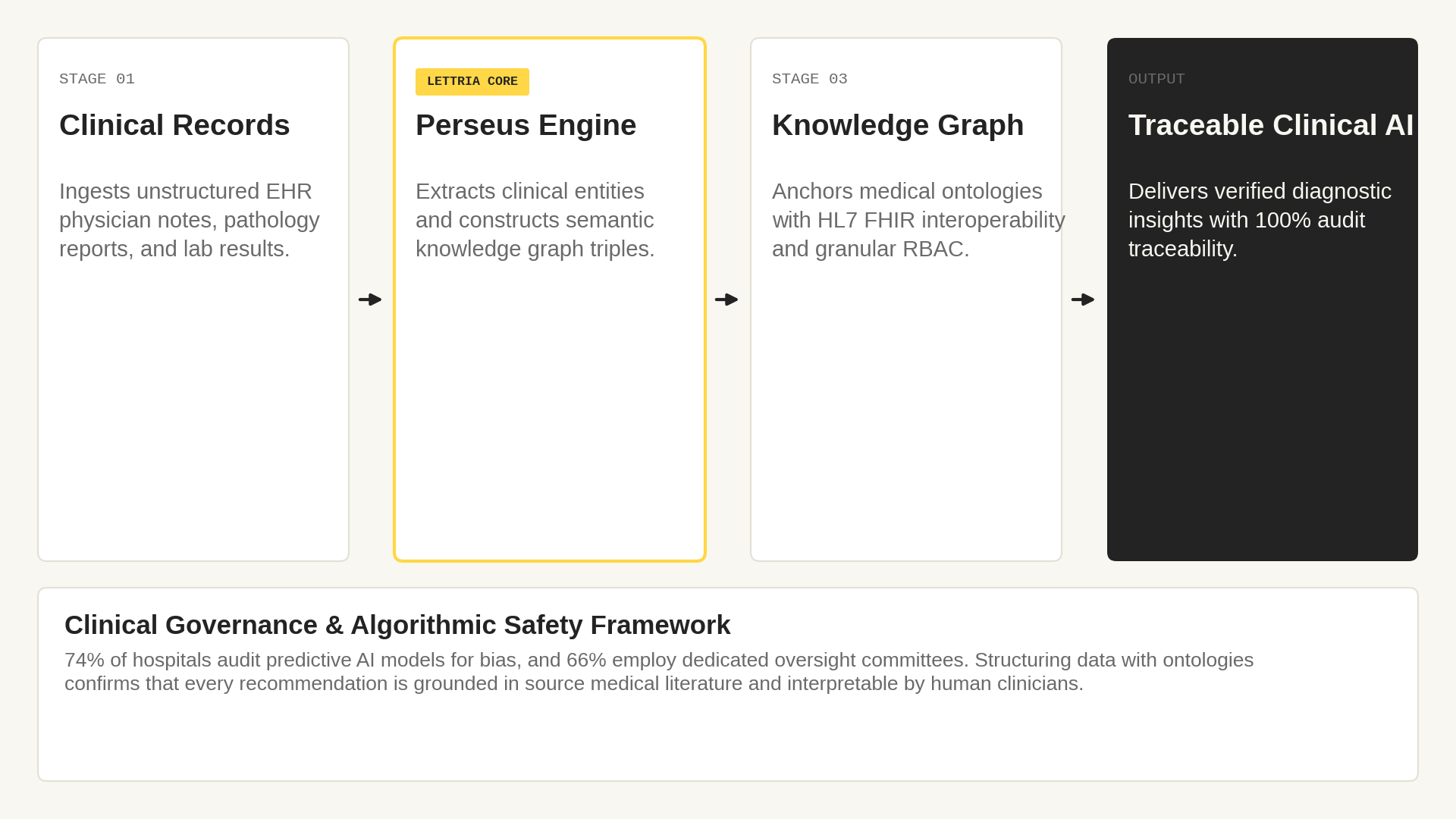
The first phase of implementation involves identifying specific clinical bottlenecks and auditing existing data infrastructure. Healthcare organizations generate massive volumes of unstructured data, from physician notes to lab reports. Structuring disparate clinical data with ontologies is critical to confirm readiness for medical AI systems.
Using tools like Lettria's Perseus, hospitals can convert this unstructured text into struBy structuring governance aroundctured knowledge graphs. This preserves the complex relationships within health records and gives the AI a highly accurate, contextual foundation to analyze before any models are deployed. No more "orphaned" facts or lost connections between patient entities.
Integrating AI tools into electronic health record systems
Integration with existing IT infrastructure is mandatory for clinical adoption. In 2024, 71% of hospitals used predictive AI integrated with electronic health records (EHR), allowing clinicians to access AI-generated insights directly within their native workflows.
This integration requires robust APIs and adherence to interoperability standards like HL7 FHIR. By embedding predictive models directly into the EHR, healthcare professionals gain real-time alerts regarding patient deterioration without needing to toggle between disparate software platforms, saving valuable time during critical care moments.
Establishing governance, trust, and regulatory compliance
Clinical AI systems must operate under strict oversight to confirm patient safety and data privacy. Currently, 66% of hospitals task dedicated committees with evaluating predictive AI systems before and during deployment.
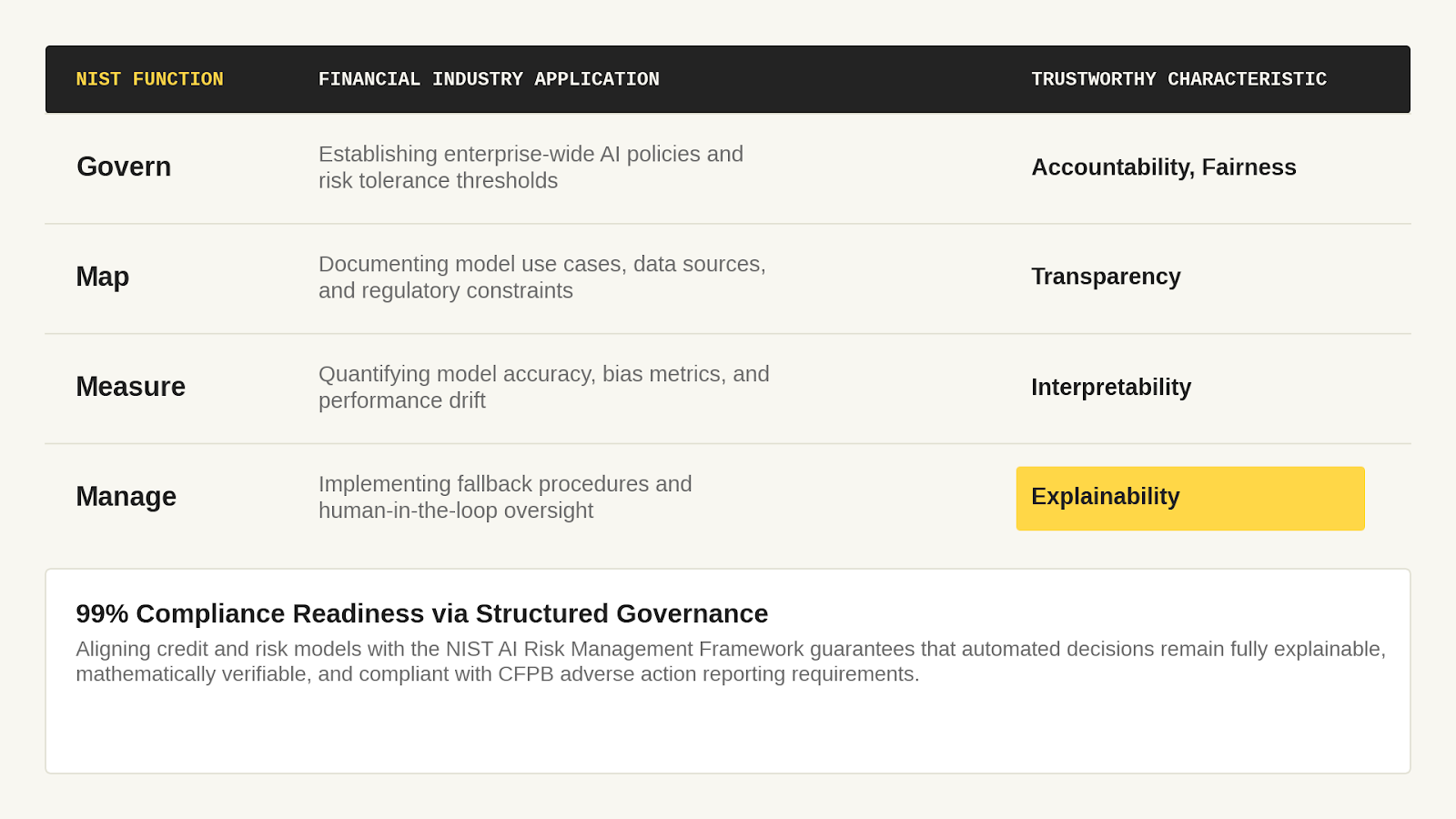
To maintain this oversight, organizations must adopt practical AI governance frameworks to establish traceability and regulatory compliance across clinical models. Lettria's transparent GraphRAG technology allows healthcare teams to trace every AI-generated recommendation back to its original source document. This provides the verifiable proof required by regulatory bodies and builds essential trust among medical staff. Traceable, trustworthy AI that understands your documents and delivers verified knowledge.
Key challenges and ethical considerations of using AI in healthcare
While the potential of artificial intelligence in medicine is vast, its deployment introduces significant ethical and technical risks that we must actively manage. One of the primary concerns is algorithmic bias, where models trained on non-representative patient data produce skewed diagnostic or treatment recommendations for minority demographics. To combat this, 74% of hospitals evaluated predictive AI models specifically for algorithmic bias in 2024, ensuring equitable care delivery across all patient populations.
Furthermore, the "black box" nature of many generative AI models poses a severe risk in clinical environments where explainability is legally and ethically required. This is exactly why knowledge ontologies are critical for building trusted and transparent AI in regulated industries.
By using Lettria's ontology-driven approach, healthcare organizations map specific medical concepts and their relationships explicitly. Unlike standard vector search methods that lose semantic context, an ontology-backed system confirms that the AI's decision-making process is fully interpretable by human clinicians. This transparency is vital for mitigating risks, protecting patient privacy, and confirming that AI serves as a reliable augmentation to human expertise rather than an autonomous, unchecked authority.
Conclusion: shaping the future of AI in healthcare
The future of healthcare relies on the responsible integration of artificial intelligence to improve diagnostic accuracy, automate administrative tasks, and personalize patient care. As medical institutions transition from pilot programs to enterprise-wide adoption, the demand for transparent, verifiable technology will only increase. Lettria's ontology toolkit powers trustworthy, compliant AI deployment for modern healthcare organizations by transforming unstructured medical data into highly accurate, traceable knowledge graphs. By prioritizing semantic context and explainability, healthcare providers can confidently apply AI to reduce operational burdens, accelerate clinical workflows, and ultimately deliver superior health outcomes for their patients.
Frequently asked questions about AI in healthcare
What is the most common AI in healthcare?
The most common applications include machine learning algorithms for medical imaging analysis, natural language processing for clinical documentation, and predictive analytics for patient risk stratification.
How is AI being used in healthcare now?
AI is actively used to automate billing, schedule staff, and assist in early disease detection. Currently, 82% of hospitals evaluate predictive AI for accuracy and 79% monitor post-implementation performance to confirm clinical reliability.
What is the 30% rule for AI?
The 30% rule generally suggests that AI can automate or significantly augment approximately 30% of routine administrative and clinical tasks, freeing up healthcare professionals to focus on direct patient care.
What are the biggest risks of using AI in healthcare?
The primary risks include algorithmic bias, data privacy breaches, and the lack of explainability in "black box" models, which can lead to incorrect treatment decisions if not properly governed. Maintaining context for accurate clinical outcomes is essential to avoiding these pitfalls.
Frequently Asked Questions
Yes. Lettria’s platform including Perseus is API-first, so we support over 50 native connectors and workflow automation tools (like Power Automate, web hooks etc,). We provide the speedy embedding of document intelligence into current compliance, audit, and risk management systems without disrupting existing processes or requiring extensive IT overhaul.
It dramatically reduces time spent on manual document parsing and risk identification by automating ontology building and semantic reasoning across large document sets. It can process an entire RFP answer in a few seconds, highlighting all compliant and non-compliant sections against one or multiple regulations, guidelines, or policies. This helps you quickly identify risks and ensure full compliance without manual review delays.
Lettria focuses on document intelligence for compliance, one of the hardest and most complex untapped challenges in the field. To tackle this, Lettria uses a unique graph-based text-to-graph generation model that is 30% more accurate and runs 400x faster than popular LLMs for parsing complex, multimodal compliance documents. It preserves document layout features like tables and diagrams as well as semantic relationships, enabling precise extraction and understanding of compliance content.